
.png)

From the KKK to Don Lemon: Why Prosecutors Are Using a Reconstruction-Era Law to Charge a Journalist
- Feb 3
- 5 min read
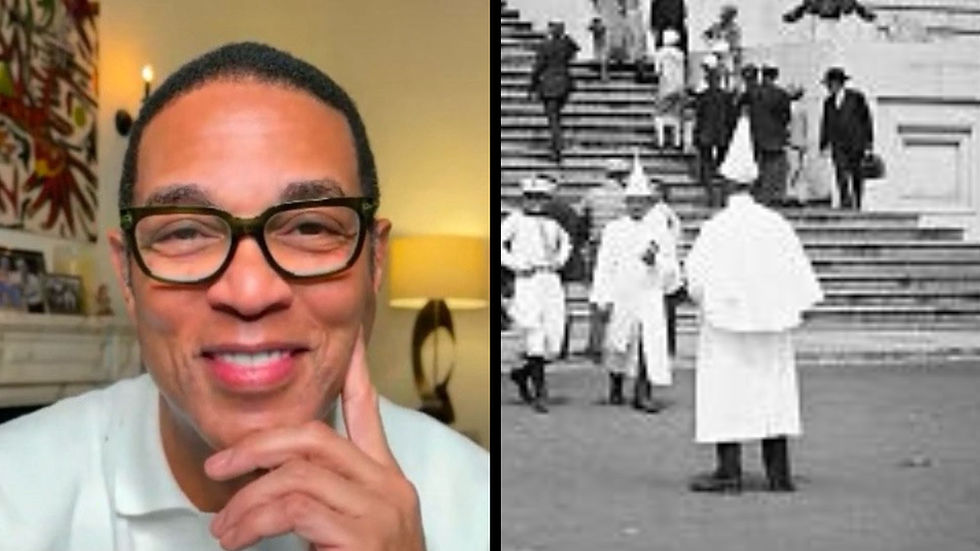
The federal arrest of journalist Don Lemon on January 29, 2026, has become a flashpoint for the debate over where "journalism" ends and "conspiracy" begins. To understand the charges, we must look at the ten critical factors that turned a local tragedy into a national legal showdown.
1. The Catalyst: The Killing of Renee Good
The story begins on January 7, 2026, when Renee Good, a 37-year-old mother and U.S. citizen, was fatally shot by ICE agent Jonathan Ross in Minneapolis. Bystander videos showed agents preventing a doctor from reaching Good as she lay dying. This event ignited a firestorm of local outrage and national protests, setting the stage for the Jan. 18 demonstration.
2. The Target: Cities Church and the Pastor-ICE Connection
The protest was not random. Demonstrators targeted Cities Church in St. Paul because one of its pastors, David Easterwood, also serves as the head of the local ICE field office. Protesters argued that a "man of God" could not lead a church while also directing local immigration enforcement actions.
3. The Incident: January 18 at Cities Church
During the Sunday service, protesters entered the sanctuary chanting "ICE Out" and demanding justice for Renee Good. Don Lemon and fellow journalist Georgia Fort were present, filming the disruption. Lemon’s own livestream captured him interviewing churchgoers and demonstrators, while repeatedly stating, "I’m not here as an activist. I’m here as a journalist."
4. The Specific Charges: FACE Act and Conspiracy
The Department of Justice, under Attorney General Pam Bondi, charged Lemon with two major federal crimes:
The FACE Act: Traditionally used to protect abortion clinics, this 1994 law also protects houses of worship. The government alleges Lemon’s "interrogation" of the pastor constituted "physical obstruction" of a religious service.
18 U.S.C. § 241 (Conspiracy Against Rights): This Reconstruction-era law—originally used to dismantle the Ku Klux Klan—is being used to argue that Lemon "conspired" with protesters to strip congregants of their First Amendment right to worship.

In a rare move, federal prosecutors secured Lemon's arrest through a Grand Jury after two federal judges had already refused to sign arrest warrants. Both a Magistrate Judge and a District Judge ruled there was "no evidence" of criminal behavior in Lemon’s reporting. By taking the case to a Grand Jury, prosecutors were able to present their evidence in a secret, one-sided room where no defense attorney was allowed to cross-examine their claims.
6. The "Other" Journalist: Georgia Fort
Lemon was not the only member of the press targeted. Georgia Fort, an independent Minnesota reporter, was arrested at her home while recording federal agents at her door. Her arrest has become a secondary focal point for press freedom groups, who argue that the government is "criminalizing documentation."
7. The Direct Link: Pam Bondi’s Statements
Attorney General Pam Bondi has been the public face of the prosecution, stating on social media that the arrests were made "at my direction" to protect the "sacred right" to worship. Her involvement has led to accusations from Lemon’s team that the charges are a "transparent attempt to distract" from the administration's immigration policies.
8. The Public Defense: Jimmy Kimmel Live!
Following his release, Lemon appeared on Jimmy Kimmel Live! on February 2. He detailed being arrested by "a team of federal agents" at a Los Angeles hotel and used the platform to rally for independent journalism. He claimed corporate media has been "neutered" by fear of the administration, whereas he is "closer to the ground."
9. The Travel Order: Destination France
Despite the severity of the charges, a federal judge in Los Angeles granted Lemon permission to travel to France in June 2026. While he was released without having to post a cash bond, his travel is still monitored as the case moves toward trial in Minnesota.
10. The Ultimate Battle: SCOTUS and the Free Exercise Clause
Legal experts believe this case is destined for the Supreme Court. The central tension is between the Free Press and the Free Exercise of Religion. Given the current Court's history of prioritizing religious liberty, prosecutors believe they have a strong hand. They argue that even "pseudo-journalism" cannot be used as a shield to disrupt a prayer service.
The Two Sides of the Legal Coin
The Prosecution's Goal | The Defense's Goal |
Prove Lemon intended to help the "mob." | Prove Lemon intended to cover the news. |
Use the FACE Act to protect the pews. | Use the First Amendment to protect the lens. |
Highlight the "conspiracy" in the parking lot. | Highlight the "reporting" in the sanctuary. |
This case represents more than just a trial for one man; it is a test of whether the laws meant to protect our most sacred rights can also be used to silence those who witness their violation.
The Spark: Why Cities Church? The "Dual Role" Controversy
While the news has focused heavily on the arrest of Don Lemon, many readers are left asking: Why this specific church? The answer lies in a controversial intersection of faith and federal authority.
The Man at the Center: David Easterwood
The protest at Cities Church in St. Paul was not a random act of disruption. It was a targeted response to the identity of one of its leaders: David Easterwood.
Easterwood holds a unique and, to many, contradictory dual role:
Religious Leader: He is a lay pastor and elder at Cities Church.
Federal Official: He is the Acting Field Office Director for ICE in St. Paul, responsible for enforcement and removal operations across several states.
The "Moral Hypocrisy" Argument
Protesters, including high-profile activists like Nekima Levy Armstrong, argued that Easterwood’s two roles were fundamentally incompatible. They contended that a "house of God" should not harbor a leader responsible for what they described as "tearing families apart."
The demonstration was specifically timed to expose this link to the congregation. Activists claimed that churchgoers had a right to know that their tithes supported a man directing federal immigration raids—the same raids that protesters link to the atmosphere of fear leading up to the Renee Good shooting.
The Church’s Defense
Cities Church leaders and the Southern Baptist Convention have pushed back strongly against this narrative. They argue:
The Sacredness of Worship: Regardless of a pastor’s secular job, a worship service is a protected, private religious event that should be free from political intrusion.
A "Shameful" Disruption: Church officials characterized the protest as "lawless harassment" that traumatized families and children who were simply there to pray.
Vocation vs. Faith: Supporters of the church believe a Christian can serve in law enforcement with integrity and that targeting a sanctuary because of a member's employment is a violation of religious liberty.




Comments